GLASS x STEEL
C O M P L E T E D 2 0 2 3
Once in a Blue Moon is a site-specific light installation conceived for the forest of Flimwell. The chosen site is classified as being in the ‘old growth’ stage, a phase in which trees begin to die from low-level mortality such as windthrow or disease, creating gaps in the canopy. These openings allow more light to reach the forest floor, encouraging the growth of shade-tolerant species and establishing a rich understory. The installation celebrates this delicate, regenerative moment in the forest’s life cycle by illuminating a specific path at its darkest and deepest point.
The proposal emerged from a series of light investigations using cast glass fragments produced in the workshop. These studies explored how glass morphologies could respond to the forest’s topography and refract light in unique ways. Drawing on ancient triangulation techniques and ongoing on-site testing, the process developed a nuanced understanding of the curvatures and lighting conditions required. In parallel, the models examined how attachment systems could be integrated directly into the casting process. This iterative exchange between studio and site culminated in a suspended composition of tensioned glass fragments, choreographed to refract light across the forest floor.
DESIGN DEVELOPMENT
As part of the design development, a series of 1:25 scale models were created to accurately reflect the site’s conditions and test the integration of attachment systems directly into the casting process. The glass casts were developed to include embedded steel framing during fabrication, allowing the frame to shape the molten glass as it cooled. This bending not only influenced the final curvature of each piece but also enabled seamless attachment to the overall suspended structure, reducing the need for secondary fixing elements and reinforcing the material coherence of the installation.
FINAL PROPOSAL
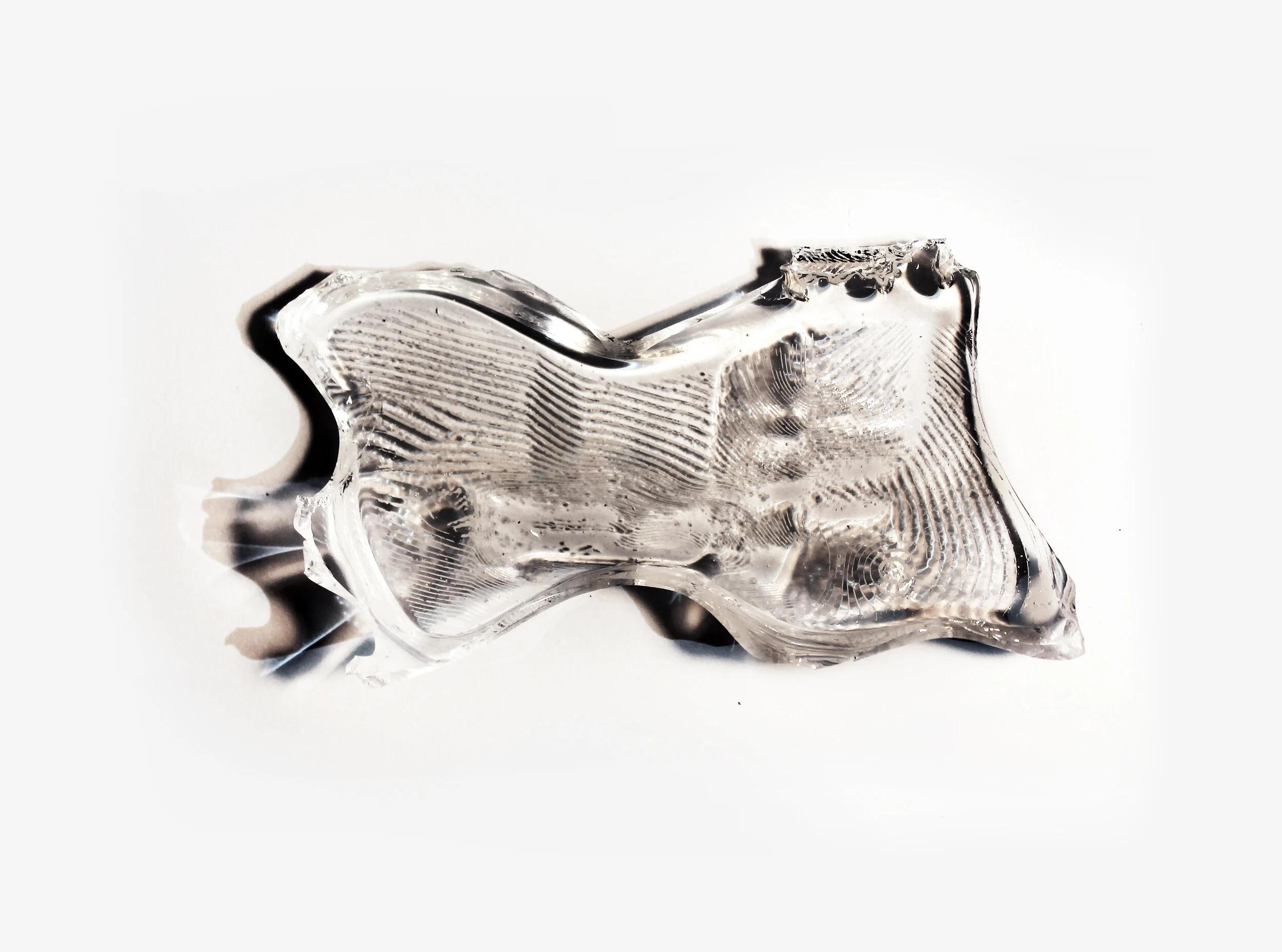
While the full installation was never realised, several glass fragments were produced at full scale, as shown below. Across both small-scale models and 1:1 prototypes, each piece contributed to a deeper understanding of how steel framing could be integrated directly into the casting process—allowing the glass to bend subtly around the frame and enabling secure attachment to the overall structure. This hands-on making approach offered vital insight into the behaviour of the material under varying conditions, refining both the casting technique and the structural logic of the installation.